Tree Surgery Explained: Essential Services for Maintaining Healthy Trees
Trees provide shade, support local wildlife and enhance the appearance of gardens and outdoor spaces. However, to remain healthy and safe, they sometimes need professional care. Tree surgery involves a range of specialist services designed to maintain tree health, manage growth, remove damaged branches and address potential safety concerns.
For property owners in Giltbrook, Nottingham, regular tree maintenance can help prevent avoidable problems while allowing trees to thrive in their surroundings. Giltbrook Tree Surgeons provides professional tree care services tailored to the condition, size and location of individual trees.
What Is Tree Surgery?
Tree surgery is the professional management and maintenance of trees to support their health, structure and safety. It includes carefully planned work such as pruning, crown reduction, deadwood removal and tree felling when necessary.
Unlike simply cutting back branches, effective tree surgery considers how a tree grows, responds to pruning and interacts with nearby buildings, paths and gardens. Using the correct techniques helps preserve the tree’s natural structure and reduces the risk of unnecessary damage.
The most suitable service depends on the tree species, its condition, its surroundings and the reason for the work. A professional assessment helps establish what is needed rather than removing healthy growth without good reason.
Essential Tree Surgery Services
1. Tree Pruning
Tree pruning involves removing selected branches to improve a tree’s structure, manage its growth or address damaged and unhealthy sections. Appropriate pruning can reduce crossing branches, improve the distribution of growth and help prevent minor structural issues from becoming more significant.
Timing and technique are important. Excessive or poorly planned pruning can place stress on a tree and leave it more vulnerable to disease or decay. A tree surgeon can identify which branches should be removed and how much growth can be safely cut back.
For gardens in Giltbrook, Nottingham, professional pruning can help maintain trees without compromising their natural shape or long-term health.
2. Crown Reduction
Crown reduction reduces the overall height or spread of a tree while retaining its main framework and natural appearance. It may be appropriate when a tree has outgrown its available space or when its branches extend too far towards nearby structures.
The aim is to reduce the crown carefully, rather than cutting it back indiscriminately. Poorly executed reduction can create large wounds and encourage weak regrowth.
A qualified tree surgeon will assess the tree’s structure and determine whether crown reduction is suitable. In some cases, selective pruning may achieve the desired result with less intervention.
3. Crown Thinning
Crown thinning involves selectively removing branches throughout the crown to reduce its density while maintaining its overall size and shape. This can help manage crowded growth and improve the distribution of light through the canopy.
However, thinning should not be confused with removing large numbers of branches to make a tree appear sparse. Removing too much foliage can affect the tree’s ability to produce energy and may encourage unwanted regrowth.
Professional crown thinning focuses on maintaining a balanced canopy while preserving the tree’s natural form.
4. Deadwood Removal
Deadwood removal involves cutting away dead, dying or damaged branches that may fall and cause injury or property damage. Dead branches can develop naturally as trees grow, but their condition and position should be assessed, particularly when they overhang paths, driveways or areas used by people.
Removing appropriate deadwood can improve safety and help identify other issues affecting the tree. During the work, a tree surgeon may also notice signs of decay, disease or structural weakness that require further attention.
5. Tree Felling and Removal
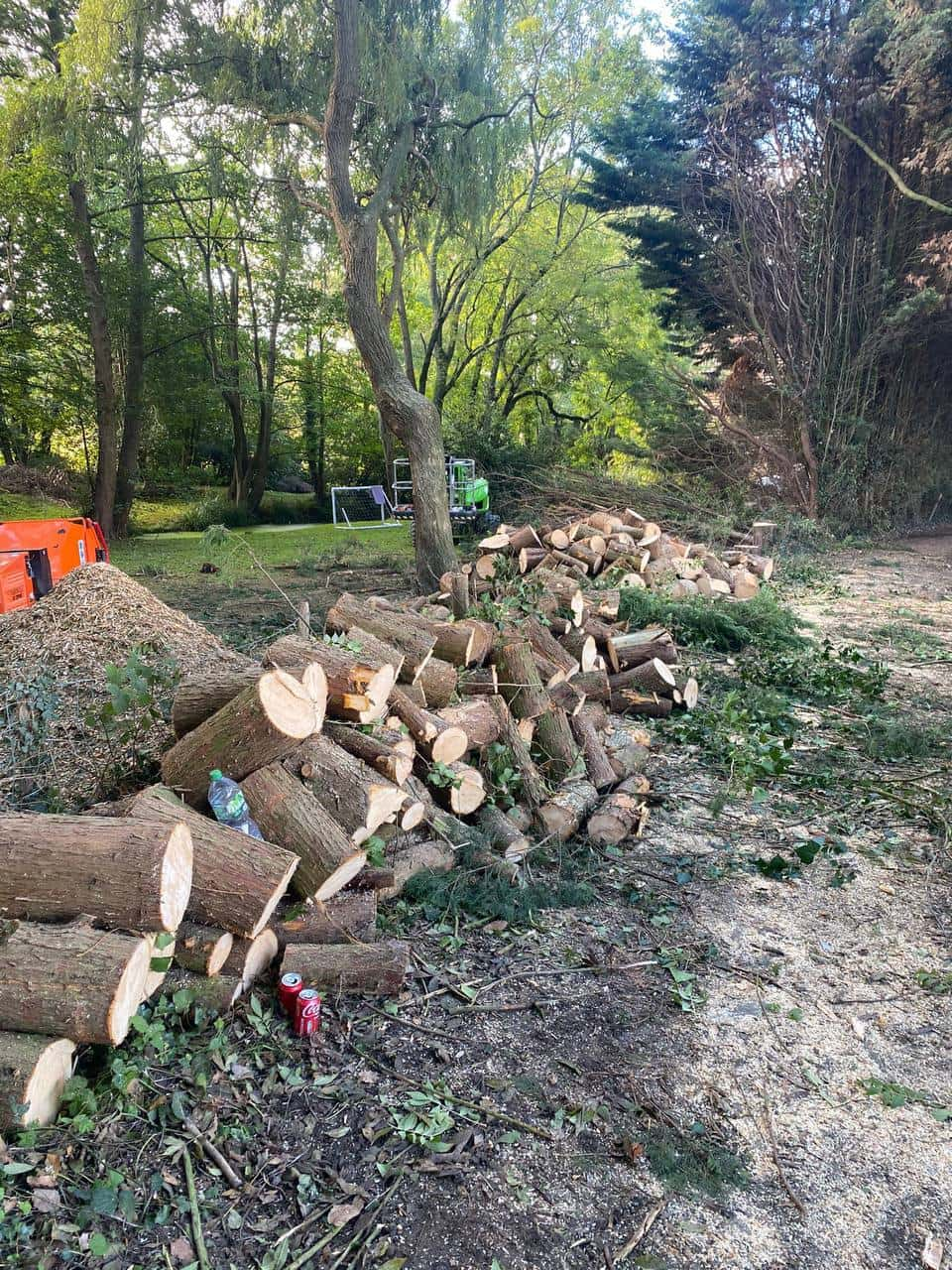
Tree felling involves removing a tree when it is dead, severely damaged, unsuitable for its location or considered unsafe following professional assessment. Removal may also be necessary when a tree’s condition cannot be managed effectively through pruning or other maintenance.
Felling requires careful planning, particularly where trees are close to buildings, fences, roads or other obstacles. Depending on the available space and the tree’s condition, it may be necessary to dismantle the tree in controlled sections.
Removing a tree should not automatically be the first option. Where practical, a tree surgeon can advise whether maintenance could address the problem while retaining the tree.
6. Hedge Trimming and General Tree Maintenance
Although hedges require different techniques from mature trees, hedge trimming is another important aspect of maintaining outdoor spaces. Regular attention can control excessive growth, preserve a neat appearance and prevent hedges from obstructing paths or access points.
General tree maintenance also involves monitoring growth, checking for visible damage and identifying changes that may indicate declining health. Early attention can make it easier to manage problems before they become more difficult to address.
Signs Your Trees May Need Professional Attention
Trees do not always show obvious signs of trouble, but certain changes warrant closer inspection. These include dead branches, major cracks, split limbs, visible fungal growth, sudden leaf loss or branches that have begun leaning unexpectedly.
Storm damage can also leave broken limbs or weaken parts of the crown. If a tree develops a sudden lean, significant cracks or hanging branches, keep people away from the affected area and seek professional advice promptly.
Not every change means a tree must be removed. A proper assessment helps distinguish normal growth from potential health or safety concerns and identifies the most appropriate response.
Why Choose Professional Tree Surgeons in Giltbrook?
Tree surgery requires knowledge of tree biology, suitable cutting methods and safe working practices. Incorrect pruning can damage a tree, while work at height or near buildings presents risks without the right equipment and expertise.
Giltbrook Tree Surgeons can assess the condition of trees, recommend suitable maintenance and carry out work with consideration for the surrounding property and garden. Professional guidance helps ensure that each tree receives appropriate care rather than unnecessary cutting.
Whether you need routine pruning, crown management, deadwood removal or advice about a damaged tree, choosing the right service can help protect both the tree and its surroundings.
Conclusion
Tree surgery plays an important role in maintaining healthy trees, managing growth and addressing potential hazards. Services such as pruning, crown reduction, crown thinning and deadwood removal can help preserve tree structure, while felling may be appropriate when a tree cannot be managed safely.
For property owners in Giltbrook, Nottingham, seeking professional advice can help identify the right approach for each tree. Contact Giltbrook Tree Surgeons to discuss your tree maintenance needs and arrange an assessment to help keep your outdoor space safe, tidy and well maintained.
Call us on: 0115 647 1194
Click here to find out more about Giltbrook Tree Surgeons
Click here to complete our contact form and see how we can help with your tree needs.